Pottery mark methods: impressed, incised, underglaze and printed
How each kind of pottery mark was made, how to recognize it on the base, and what the method can and can't tell you about age.
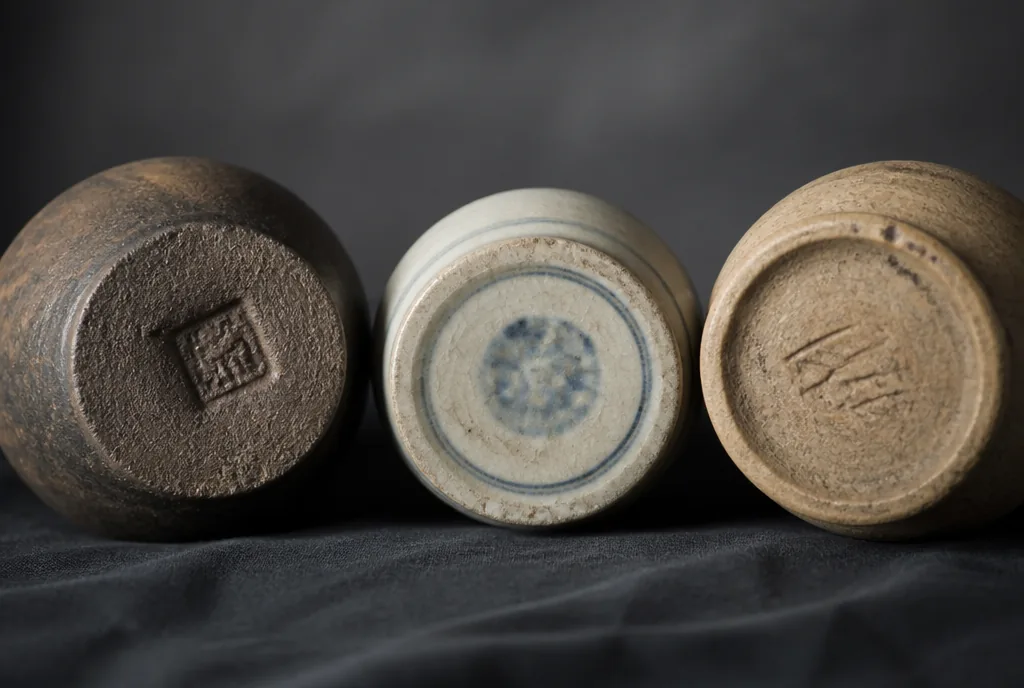
Quick answerPottery marks were put on in a handful of ways: pressed into the clay (impressed), scratched into it (incised), painted or printed under the glaze, or applied on top of it (overglaze, including decals). Impressed and underglaze marks went on before the final firing and are part of the piece. Overglaze marks sit on the surface and could be added later, so they deserve a closer look.
Knowing how a mark was made tells you what you’re looking at before you know who made it. It can separate a factory mark from a painted pattern number, and a printed backstamp from hand lettering. What it can’t do on its own is date a piece. Several methods ran side by side for a long time.
Where to look, and what you’re likely to find
Pottery and porcelain marks are usually on the underside. They run from a simple impressed name to an elaborate printed device with a crest, a pattern name and numbers.
Early English wares often carried impressed or written names, early SPODE among them. In the 19th century, printed backstamps with names, registry numbers and pattern codes became standard. Western porcelain with printed decoration is usually marked underneath in Western letters.
Not every mark was meant for you. Early marks were often workmen’s, batch or kiln marks, put there for the factory’s own use and not for buyers.
The methods, one by one
| Method | How it was done | How to recognize it | What it tells you |
|---|---|---|---|
| Impressed | Pressed into the clay before firing | A sunken mark in the body; can look faint under glaze | Part of the original piece. Used early, and still used alongside printed marks later |
| Incised | Drawn into the clay with a sharp tool | Lines cut into the surface | Press molding was later used to imitate incising, so check whether the lines look hand-cut or molded |
| Underglaze | Painted or printed on the body before glazing | Sealed under the glaze; cobalt, iron and copper oxides are the usual colors | Part of the original firing |
| Printed (transfer) | Transferred from an engraved plate | Uniform lines, even washes, sometimes broken lines | A factory backstamp; standard in English wares by the 19th century |
| Overglaze and decals | Applied on top of the fired glaze | Sits on the surface; may be worn | Could have been added after the piece left the factory |
| Hand-painted numbers | Painted by a decorator | Brush strokes, uneven pigment | Often a pattern number tied to the factory pattern book, not a date |
Impressed and incised marks
These are the marks made in the clay itself. Stoneware maker marks, for example, went onto the raw clay before firing.
Impressed does not mean old. Impressed marks stayed in use alongside printed ones, so a stamped-in name is a clue to how the piece was made and not, by itself, to when.
Incising means drawing a pattern into the clay with a sharp tool. Later potters used press molding to imitate the look. If a piece looks incised, keep in mind that the effect may be molded.
Underglaze marks and decoration
Underglaze work is painted on the body before glazing and ends up sealed under the glaze. Cobalt, iron and copper oxides are the usual colors. Because the mark is under the glaze, it went on before the glaze firing and belongs to the original piece.
Printed marks and transfer printing
Transfer printing on ceramics began in England in 1756, with Sadler and Green of Liverpool. In 1784 Josiah Spode perfected blue underglaze printing on earthenware from engraved copper plates. Those dates are for the technique itself; an English transfer-printed piece can’t be older than the method.
Printed decoration and marks tend to look uniform. The washes are even, and you’ll sometimes see broken lines. Hand painting shows brush strokes and small shifts in color. If a printed backstamp carries a diamond or an Rd number, see our guide to British registration marks.
Overglaze marks and decals
Decals (decalcomania) came into use for decorating ceramics in Europe around 1875, and they were applied only over the glaze. Overglaze decal decoration wears less well than underglaze, which is why it turns up mostly on decorative wares.
An overglaze mark sits on top of the fired glaze. That means it could have gone on at any time after the piece was made, including long afterward. Impressed and underglaze marks, by contrast, were fixed in the original firing.
You may see advice to test a mark with nail polish remover. The only source we have for this is one long-time collector’s answer on Gotheborg, and it applies to Occupied Japan porcelain: the collector says genuine marks there were put under the glaze, so a mark that comes off is a sign of a fake. Don’t treat it as a universal test. Solvent can damage genuine overglaze decoration, and we found no authoritative source for a general rule that overglaze marks are easier to fake than underglaze ones.
Painted numbers on the base
A hand-painted number on a base is easy to mistake for a year. It’s usually a factory pattern number, pointing to an entry in the maker’s pattern book, not to a named pattern and not to a date.
Putting it together
- Find the mark on the underside and decide whether it’s in the clay, under the glaze or on top of it.
- Check printed marks for uniform lines and even washes; check painted ones for brush strokes.
- Read any painted number as a probable pattern number, not a date.
- Give an overglaze mark extra scrutiny, and read reproductions and fake marks if anything looks off.
- Take the name or device to the Mark Finder. For Spode pieces, start with the Spode / Copeland entry.
Sources
- English Pottery Marks – A General Guide to Identification and Dating – thepotteries.org (Steve Birks)
- Glossary: Incised – Gotheborg.com
- Glossary: Underglaze decoration – Gotheborg.com
- Glossary: Transfer printing – Gotheborg.com
- Glossary: Decalcomania – Gotheborg.com
- Glossary: Printed or hand-painted decorations – Gotheborg.com
- Q&A: Occupied Japan – Gotheborg.com
- Rare Antique Stoneware Crocks – Know Old Stuff
Questions people ask
What are the small odd marks that don't look like a maker's name?
They may be workmen's, batch or kiln marks. According to thepotteries.org, early marks were often of this kind, meant for use inside the factory rather than for buyers.
When did decals come into use on ceramics?
Gotheborg dates decals (decalcomania) on European ceramics to around 1875. They were applied only over the glaze.
Does transfer printing help date an English piece?
Only as an outer limit. Gotheborg says transfer printing on ceramics began in England in 1756, so an English transfer-printed piece can't be older than that, but the method stayed in use long afterward.
The Mark Index is a reference for identifying and dating marks. It isn’t an appraisal or a guarantee of authenticity. Reproductions and later reissues can carry old marks.