England and Made in England marks: what they date on ceramics
"England" points to 1891 or later. "Made in England" is later still, though sources disagree on exactly when it started.
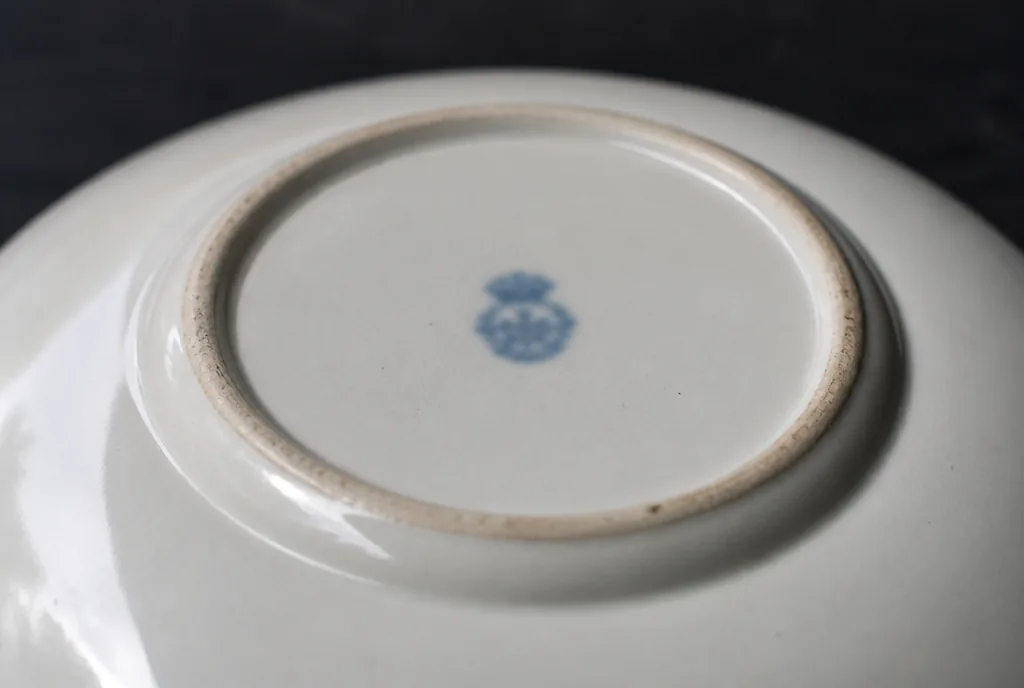
Quick answer“ENGLAND” on a British pottery mark was added to comply with the US McKinley Tariff Act, whose marking rule took effect on 1 March 1891, so with very few exceptions it means 1891 or later. “MADE IN ENGLAND” came later, but sources differ on when: thepotteries.org says it was generally introduced in 1914, while many other guides say after 1921. Read it as a 20th-century mark, most often from about 1914 to 1921 onward.
Country-of-origin wording gives you an earliest likely date. It doesn’t give you an end date, because “England” stayed in use long after “Made in England” appeared, and it doesn’t tell you who made the piece. It also has a blind spot: goods made for the British home market often carried no origin mark at all.
Where “England” came from
The McKinley Tariff Act of 1890 required imports into the US to show their country of origin in legible English words, starting 1 March 1891. British potters responded by adding “ENGLAND” to their marks. Steve Birks’s guide at thepotteries.org says that, with very few exceptions, the word was not used before 1891.
The same US law is why Japanese makers marked “NIPPON” and Chinese makers marked “CHINA.” Our guide to Nippon, Japan and Occupied Japan marks follows that side of the story.
One limit matters here. The rule only applied to goods sent to the US, so a piece made for another market may lack the word even if it dates well after 1891.
“Made in England”: the date sources disagree on
thepotteries.org says “MADE IN ENGLAND” was generally introduced in 1914, in response to tighter US marking rules, and that some firms used it earlier. Many other guides put it after 1921 instead, tying it to the same 1921 US ruling that ended the use of “Nippon.” We haven’t seen a primary document that settles it.
The safe reading: “Made in England” is generally a 20th-century mark, most often from about 1914 to 1921 onward. Don’t narrow it further on the wording alone.
“England” by itself is not proof of 1891 to 1914. It carried on long after, both alone and next to “Made in England.” And a mark with no “England” at all is not proof the piece predates 1891; home-market wares often had no origin mark.
Other wording in the mark that narrows the date
Origin wording works best combined with the other clues printed or impressed nearby. thepotteries.org gives several dating rules for English marks. They’re guidelines based on North Staffordshire practice, and exceptions occur.
| Clue in the mark | What it suggests | Notes |
|---|---|---|
| ENGLAND | 1891 or later | Very few exceptions earlier; used well into the 20th century |
| MADE IN ENGLAND | 1914 or later (thepotteries.org); after 1921 (many other guides) | Some firms used it before 1914 |
| Limited, Ld. or Ltd. | Always after 1861 | Only one pottery was a limited company in the 1860s; conversions surged in the 1890s |
| A trade mark | More standard after the Trade Marks Registration Act 1875 | The Act brought formal legal protection |
| Royal Arms | One of two styles: 1801 to 1836, or 1837 onward | Usually used unofficially, for prestige |
| A registration diamond or “Rd No” | A registered design | Decode it with our registration marks guide |
| No origin wording | No date on its own | Common on home-market wares |
Early English pottery was often unmarked for a plain commercial reason: it was sold to merchants, not to the people who used it. Clearer factory names, registration numbers and pattern marks became common in the later 19th century.
When the mark says England but the piece wasn’t made there
Not every British-looking mark tells the truth about origin. thepotteries.org warns that some pieces carry British addresses, heritage imagery or wording that suggests UK manufacture while being made abroad. The UK Parliament has considered making country-of-origin backstamps mandatory.
Read the exact words. A British address or a piece of heritage imagery is not the same thing as the words “Made in England.” Our guide to reproductions and fake marks covers the better-known cases.
Working through a mark, step by step
- Write down every word in the mark, including small print around the edge.
- Note the origin wording: none, “England,” or “Made in England.”
- Look for Ltd. or its variants, a registration diamond or an Rd number, and any trade mark.
- Take the latest earliest-date among those clues. That’s your floor.
- Check the floor against the maker’s known working dates in their entry.
- If the clues conflict, trust the combination over any single one.
A mark reading “England” with “Ltd.” and an Rd number gives you three separate floors. The latest of them is the one that counts.
Putting it together
Origin wording sets a floor, and the maker’s own dates usually set a tighter one. Enter the maker’s name or mark in the Mark Finder, or browse the pottery and porcelain entries, for example Wedgwood or Johnson Brothers. If the mark includes a diamond or an Rd number, decode that next; it often narrows the date more than the origin wording can.
Sources
Questions people ask
Does "England" on a mark mean the piece is from before 1914?
No. "England" first appeared to meet the US marking rule of 1891, but it carried on long after, both alone and alongside "Made in England." It gives an earliest date, not a range.
Why is there no "England" on my British piece?
The origin-mark rule only applied to goods sent to the US, so pieces made for the home market or other countries may lack it. Early English pottery was also often unmarked because it was sold to merchants rather than consumers.
What does "Ltd" in a pottery mark tell me?
Marks with Limited, Ld. or Ltd. always date after 1861, according to thepotteries.org. Only one pottery was a limited company in the 1860s, and conversions surged in the 1890s.
The Mark Index is a reference for identifying and dating marks. It isn’t an appraisal or a guarantee of authenticity. Reproductions and later reissues can carry old marks.