Silverplate marks: EPNS, EP, EPBM, A1 and Quadruple Plate
The letters on plated silver mostly name the metal underneath. Here is what each code means, what A1 and Quadruple really grade, and what the marks can't tell you.
Quick answerMost silverplate abbreviations name the base metal under the silver. EPNS is electroplated nickel silver, EPBM is electroplated Britannia metal, and EP simply means electro plated. A1 is a British maker’s quality grade for plate, the best of a scale that ran A1, A, B, C, D; it isn’t a silver purity. Quadruple Plate means extra layers of silver, still over base metal.
Use this guide when a piece carries letters instead of a word like STERLING. It will tell you what the letters say about the metal and the grade of plating. It usually won’t name the maker. Electroplaters followed no fixed marking rule, and many shared the same generic symbols.
First, what “plate” means here
Electroplate is silver deposited by electrolysis onto a finished object made of a cheaper metal. George and Henry Elkington received the first electroplating patents in 1840, and the process was industrialized in Birmingham from that time.
Sheffield plate is a different thing. It was made by fusing sheets of silver to a copper sheet, rather than by coating a finished object. Keep the two apart when you read the marks, because the codes below describe plated wares by their base metal.
Two base metals come up constantly, so it helps to know them. Nickel silver is an alloy of copper, zinc and nickel. Britannia metal is a softer alloy of tin, antimony and copper. Neither contains silver.
“Nickel silver” and “German silver” contain no silver, despite the name. A piece marked only NICKEL SILVER is base metal throughout.
The abbreviations, decoded
| Mark | Stands for | What’s under the silver |
|---|---|---|
| EP | Electro plated | Not stated |
| EPNS | Electroplated nickel silver | Nickel silver (copper, zinc, nickel) |
| EPBM | Electroplated Britannia metal | Britannia metal (tin, antimony, copper) |
| BP | Britannia plate | Britannia metal |
| EPGS | Electroplated German silver | German silver |
| EPCA | Electroplated copper alloy | A copper alloy |
| EPC | Electroplate on copper | Copper |
| EP ON COPPER | Electroplate on copper | Copper |
| EPWM | Electroplated white metal | White metal |
| ESM | Electroplated silver mounts | Not stated |
| MP | Magneto plate | Not stated |
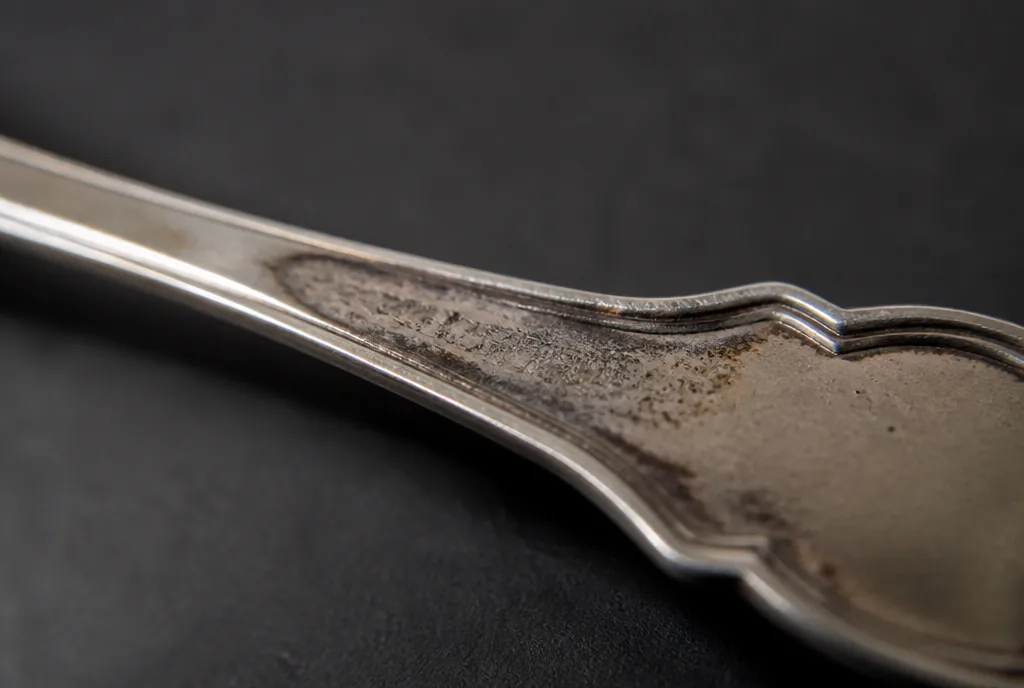
Two of the codes, as they appear on the metal:
A1 and the other grade letters
British electroplaters graded their plate with letters. A1, sometimes read as AI, was the best, followed by A, B, C and D. The grade belongs to the maker’s own scale of plating quality.
That’s the whole meaning. A1 says nothing about silver purity, and it isn’t a hallmark or an official standard. When it appears next to EPNS, the two marks together describe a top-grade plating over nickel silver.
Quadruple Plate and Triple Plate
The SFO Museum describes quadruple plate as extra layers of electroplated silver, meant to stand up to polishing and use.
How much extra is less certain. WorthPoint’s dictionary, which we saw only in a search result, describes quadruple plate as four times as heavily plated as the maker’s “standard” plate, and triple plate as three times. Some sellers explain it as the number of dips instead. We didn’t find a maker’s own catalog confirming any multiplier, so treat Quadruple as a marketing grade: heavier plate than that maker’s ordinary line, measured against a standard only the maker defined.
Whatever the multiplier, the silver is still a thin coat over base metal. “Quadruple” doesn’t make a piece solid silver.
“Silver on copper”
The documented copper marks are EP ON COPPER and EPC, both meaning electroplate on copper. You may also meet “silver on copper” spelled out in words. We couldn’t confirm that wording in any source we opened, so we can’t tell you who used it or when. Read it the same way as EPC: silver plated over copper.
Shields, lions and town letters
Much British electroplate carries small shields or pictures that look like hallmarks. They aren’t. According to silvercollection.it, many makers used generic “pseudo hallmarks” shared across firms. That’s why a piece often can’t be tied to one maker unless it also carries initials or a figural trademark.
A single letter sometimes appears among the plate marks and points to a town:
- S for Sheffield
- L for London
- M for Manchester
- G for Glasgow
The town letter narrows the search. It doesn’t identify the firm.
In the United States, the law bars the words “sterling” and “coin” from plated articles in any combination. A plated piece that says “sterling” anywhere in its marks is breaking that rule, not upgrading itself.
Reading a plate mark, step by step
- Find the letter code (EPNS, EPBM, EP and so on) and use the table to name the base metal.
- Look for a grade letter such as A1, or a word such as Quadruple or Triple. These rate the plating, not the metal.
- Note any town initial: S, L, M or G.
- Set aside the small shields and pictures. On plate they’re often generic.
- Look for maker’s initials or a figural trademark. That’s your best route to a name.
Putting it together
The letters answer “what is it” better than “who made it.” Once you know the base metal and grade, the maker’s initials or trademark are what to research. Try them in the Mark Finder, or browse the silver hub.
If you’re not sure whether the piece is plate at all, start with sterling, coin silver or silverplate. If the marks look like a real British hallmark, compare them with our guide to British silver hallmarks.
Sources
- How to read silverplate marks – silvercollection.it
- English electroplate silver – silvercollection.eu (Dictionary of Silver Hallmarks)
- Eclectic Taste: Victorian Silver Plate – SFO Museum
- Quadruple Plate – WorthPoint Dictionary
- 15 U.S. Code 297 – Stamping plated articles; trademark requirement – Cornell LII
Questions people ask
Who invented electroplating?
George and Henry Elkington received the first electroplating patents in 1840, and the process was industrialized in Birmingham from then on. It deposits silver by electrolysis onto a finished base-metal object.
Is Sheffield plate the same as EPNS?
No. Sheffield plate was made by fusing sheets of silver to a copper sheet. EPNS is electroplate: silver deposited on a finished nickel-silver object by electrolysis.
Is A1 better than sterling?
No, the two aren't on the same scale. A1 was the top of British electroplaters' own quality grades for plate (A1, A, B, C, D), while sterling is solid silver at 925 parts per thousand.
Can a letter code tell me who made my plated piece?
Rarely on its own. Makers followed no fixed rule and many used generic pseudo hallmarks shared across firms, so the maker often can't be named without initials or a figural trademark.
The Mark Index is a reference for identifying and dating marks. It isn’t an appraisal or a guarantee of authenticity. Reproductions and later reissues can carry old marks.