How to Research an Antique or Heirloom: A Step-by-Step Method
A step-by-step method for working out what an inherited or found piece is, who made it and roughly when, using marks, materials, construction, family history and the maker’s own records. It ends with a link-checked directory of appraiser organizations, collector clubs, research libraries and free search tools.
No ads · No sign-up
This page carries no advertising, no affiliate links and no email wall, and we don’t put prices on anything. Print it, hand it to a patron, or link to it.
Record the piece before you touch it, then work outward: the mark, the material, how it was made, where it came from, and what the maker’s own catalogs and patents say. Confirm what you find with two independent sources. Museums will often help identify an object but won’t put a value on it.[1] Value is an appraiser’s job, and the last section shows how to find a qualified one.
The method, step by step
- Record it before you clean or fix anything
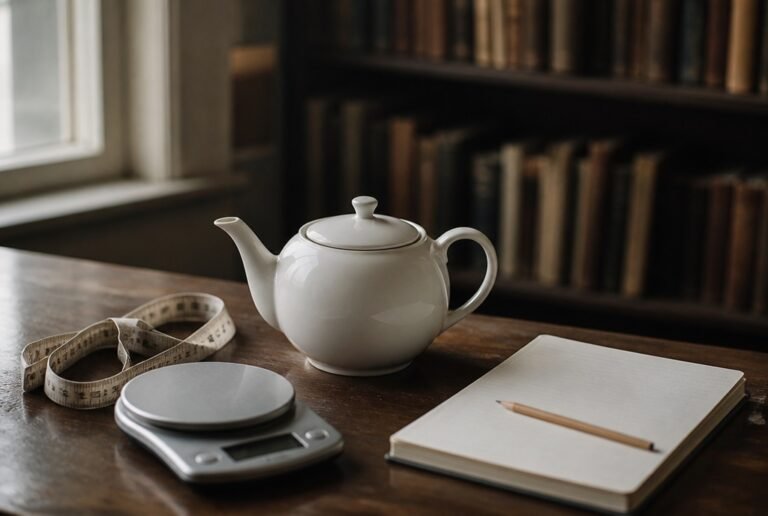
Photograph every side, the base and any mark, with a ruler in the frame for scale. Measure it and weigh it. Our free Object Record Worksheet has a box for each of these.
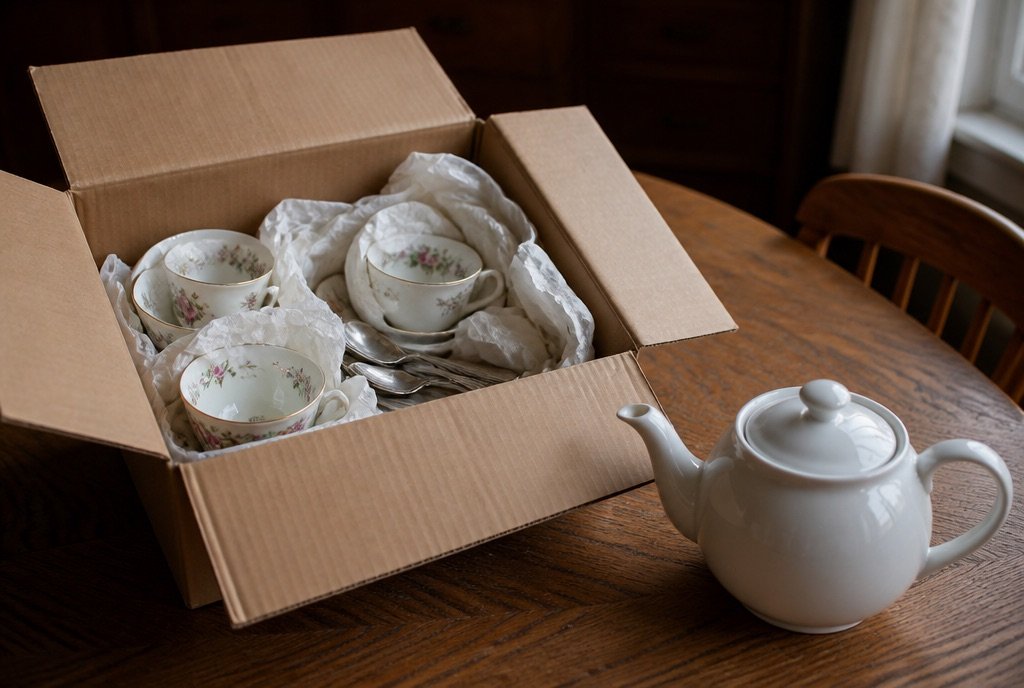
Hold off on cleaning. The American Institute for Conservation (AIC) advises against putting historic or valuable ceramics and glass in a dishwasher, and against soaking porous ceramics such as earthenware, which can drive stains deeper into the body.[2] On metals, AIC warns that repeated polishing can wear away fine detail and even remove silver plating completely.[3] The National Park Service’s collection-care notes say wet cleaning of ceramics and glass by untrained staff isn’t recommended because of the risk of damage.[4] If something breaks, keep every fragment.[2]
- Find the mark and copy it exactly
Look on the base, the reverse, inside lids, on clasps and under handles. Our guide to where to find marks covers each kind of object. Write the mark down line by line, exactly as it appears, with a [?] for any letter you can’t read. Note how it was made: pressed into the clay, printed, painted, struck into metal or molded into glass. Pottery mark methods explains why that matters.
Then search the words in the Mark Finder and in the references on our link-checked directory of mark databases.
- Use the words in the mark to narrow the date
Some words set a date by themselves. A country name required by U.S. customs law, a design registration number or a patent number each set an earliest possible date. See our country-of-origin dating chart, British registration marks and patent numbers as dating tools. Remember that a mark gives an earliest date, not proof of age: reproductions copy old marks.
- Look closely at the material and how it was made
Write down what the piece is made of and every sign of how it was made: seams, tool marks, how parts are joined, wear in the places hands and tables touch. On silver, the purity marks and plating marks are their own clues; see sterling, coin silver or silverplate and silverplate abbreviations. With no mark at all, start with how to research an unmarked piece.
- Trace where it came from
Provenance is the record of who owned a piece and when. Start at home: receipts, letters, wills, insurance lists and old family photographs that show the piece. Write down family stories with the name of the person who told them and the date, and keep the story separate from what the documents prove.
For art and collections that passed through dealers or auctions, research libraries hold the trail. The Getty Research Institute says it holds one of the strongest collections in the world for studying provenance[5], and the Smithsonian’s Archives of American Art holds more than 30 million items, including the papers of artists, dealers and collectors.[6]
- Check the maker’s own catalogs, patents and trademarks
The Library of Congress calls manufacturers’ trade catalogs a significant source for company and decorative arts history.[7] It says trade literature can identify the date of design or manufacture, the materials used and the specifications.[8] Because catalogs are filed under varying subject terms, the Library advises using several search strategies.[8]
The Smithsonian’s Trade Literature Collection holds nearly 500,000 catalogs, manuals, brochures and company histories from about 40,000 companies.[9] Most of it isn’t digitized, but the inventory can be searched by company name, brand name, industry or keyword.[9] Winterthur and Hagley publish digitized selections; Hagley’s run from 1783 to 1988.[10][11]
A patent or trademark number in a mark leads straight to an official record. USPTO Patent Public Search is free, though the USPTO says it will require a sign-in with a USPTO account from November 7, 2026.[12] Google Patents indexes more than 120 million patent publications from over 100 patent offices.[13] The free tools are in the directory below.
- Confirm with two sources, and ask a museum to identify it
One match is a lead. Two independent sources that agree on the maker and the dates make an identification. A museum record with a photograph of a matching object makes a strong second source.
Museums can help with identification, though not with value. The Smithsonian doesn’t offer monetary evaluations as a matter of policy[1], and its staff rules bar estimates of monetary value for the kinds of objects its museums collect.[14] For help identifying an object, the Smithsonian points people to university or local libraries and to state and local historical societies and museums.[1] Some university museums identify objects as a public service. The Sam Noble Museum at the University of Oklahoma does, while saying it doesn’t appraise or buy objects.[15] The Maxwell Museum at the University of New Mexico says it may be able to identify an object in some cases.[16]
Printable: the Object Record Worksheet
One page per piece
Measurements, a photo checklist, a box to transcribe the mark line by line, materials and construction, provenance, a research log and your conclusion with its evidence. Free under CC BY 4.0: copy it, hand it out, put it in a research guide.
When you need an appraiser
We don’t estimate values and we don’t sell appraisals. When you need a value, you need an appraiser, and the right one depends on why you need it. Members of the Appraisers Association of America appraise for insurance, estate tax, charitable donation, equitable distribution, liquidation, purchase and sale[17], and the International Society of Appraisers points out that a value for insurance can be very different from one for estate tax, resale or a donation.[18] Tell the appraiser the purpose up front; a proper report states the type of value and how the appraisal will be used.[19]
Credentials and what they mean
Unlike real estate appraisers, personal property appraisers don’t need a license: The Appraisal Foundation says no law requires them to hold a credential or designation to practice.[20] Credentials come from professional organizations instead. The Foundation names three as its personal property partners: the American Society of Appraisers (ASA), the International Society of Appraisers (ISA) and the Appraisers Association of America (AAA).[20]
| Organization | Designations | What it takes | USPAP |
|---|---|---|---|
| American Society of Appraisers | AM (Accredited Member), ASA (Accredited Senior Appraiser), FASA (Fellow) | AM: 2 years of full-time appraisal experience. ASA: 5 years.[21] Both pass a 4-hour exam in their specialty and submit two real client reports for review.[21] FASA is the society’s highest honor.[22] | All members pass a 15-hour USPAP course and exam.[23] |
| International Society of Appraisers | AM (Accredited Member), CAPP (Certified Member) | AM: a declared specialty and 700 documented hours of appraisal-related experience.[24] CAPP: 900 documented hours and the CAPP exam.[24] | 15-hour course to join, then the 7-hour update every two calendar years.[25] |
| Appraisers Association of America | Certified Member (uses “AAA” after the name), Accredited Member | Certified: at least ten years of experience and a day-long exam in a specialty.[26] Accredited: no specialty exam.[26] | All members must produce USPAP-compliant appraisals; renewal includes a USPAP course every two years.[26][27] |
What USPAP is
USPAP, the Uniform Standards of Professional Appraisal Practice, is the generally recognized ethical and performance standard for the appraisal profession in the United States.[28] The Appraisal Standards Board updates it; the most recent update took effect January 1, 2024, and the Foundation lists the 2024 edition as current.[28][29] A personal property appraiser can be bound by it through professional membership, a client contract or state law.[28] Ask whether the appraisal you’re paying for will comply.
Donating an item: the IRS rules
If you plan to give a piece to a museum or charity and claim a tax deduction, the IRS sets its own rules for the appraisal. This summary is from IRS Publication 561 (revised December 2025); it isn’t tax advice, so check the current publication or ask a tax professional.[30]
- If the deduction claimed for an item, or a group of similar items, is more than $5,000, you generally need a qualified appraisal[30] and Section B of Form 8283. Form 8283 itself isn’t an appraisal.[31]
- The appraisal must be signed by the qualified appraiser and dated no earlier than 60 days before the gift.[30]
- A qualified appraiser has verifiable education and experience valuing that type of property[30]; one way to qualify is a designation from a generally recognized appraiser organization for that type of property.[30]
- The dealer who sold you the item, and the dealer’s employees, can’t be the qualified appraiser for it.[30]
- Generally, no part of the fee can be based on a percentage of the appraised value.[30] The regulation says the fee can’t be based “to any extent” on the appraised value.[32]
Questions to ask before you hire
- How do you charge? ISA says hourly fees, flat rates or per-item charges are acceptable, and advises against an appraiser who charges a percentage of value or a contingency fee.[18]
- Have you personally passed the training and testing? Membership in a group that tests its members isn’t the same thing; ask.[18]
- Is this in your specialty? No appraiser should claim expertise in everything.[18]
- Do you have any financial interest in the piece? A proper report says the appraiser has none, or discloses it.[19]
- May I see your résumé? ISA notes that the burden of checking qualifications is on the consumer.[18] The Appraisal Foundation isn’t an enforcement agency and can’t take complaints about appraisers[33], so do the checking before you hire.
If it needs repair: find a conservator
AIC’s Find a Professional search lists conservators whose training and work were reviewed by their peers.[34] AIC says a conservator will want to examine the object before suggesting a treatment, and it warns against quick, cheap restoration offers.[35]
The directory
Appraiser organizations, conservators, collector clubs, research libraries and free search tools. We describe each from its own pages as they read on the check date. No price guides, no paid appraisal sites.
Showing all 45 references.
Appraisers and conservators
National directories of credentialed appraisers, the standards they follow, and where to find a conservator.
American Society of Appraisers: Find an Appraiser
myaccount.- What it is
- Searchable directory of ASA's designated appraisers for any type of property. ASA's personal property designations are Accredited Member (AM) and Accredited Senior Appraiser (ASA); Fellow (FASA) is its highest honor.
- Run by
- American Society of Appraisers (nonprofit).
www.appraisers.org/find-an-appraiser redirects here.
Appraisers Association of America: Find an Appraiser
appraisersassociation.- What it is
- Directory of the Association's Certified and Accredited Members, searchable by keyword, location and specialization. Certified Members carry the suffix "AAA" after their name.
- Run by
- Appraisers Association of America, a 501(c)(6) nonprofit founded in 1949.
Replaces the dead appraisersassoc.org links. The site shows sponsor banner ads (auction houses, a law firm, an art-market database). Cloudflare blocks plain HTTP checks; confirmed in a real browser.
International Society of Appraisers: Find an Appraiser
isa-- What it is
- Search ISA members by item, specialty or location. ISA says its Certified (CAPP) and Accredited (AM) members are Qualified Appraisers as defined by The Appraisal Foundation.
- Run by
- International Society of Appraisers (not-for-profit, founded 1979).
ISA's companion page 'Questions to Ask an Appraiser' (isa-appraisers.org/find-an-appraiser/questions-to-ask-an-appraiser) is a good consumer checklist. ISA warns of scams abusing its inquiry form.
The Appraisal Foundation: USPAP
appraisalfoundation.- What it is
- Explains the Uniform Standards of Professional Appraisal Practice, the ethical and performance standards for appraisers in the United States, which cover personal property as well as real estate. The current edition is the 2024 edition, effective January 1, 2024.
- Run by
- The Appraisal Foundation (authorized by Congress); standards set by its Appraisal Standards Board.
The page explains USPAP for free; the USPAP text itself is sold in TAF's store. The old appraisalfoundation.org/imis/… USPAP URL redirects to the store product page, so link this /pages/uspap page instead.
The Appraisal Foundation: Personal Property Appraisal
appraisalfoundation.- What it is
- Explains that no law requires personal property appraisers to hold a credential, that the Foundation sets recommended qualification criteria but issues no credentials, and names ASA, ISA and the Appraisers Association of America as partner organizations that do.
- Run by
- The Appraisal Foundation.
American Institute for Conservation: Find a Professional
culturalheritage.- What it is
- Search for conservators who are AIC Professional Members, whose training and work were reviewed by peers, by specialty, material or service and location. For damage, cleaning or repair questions before you research or sell.
- Run by
- American Institute for Conservation (AIC).
Opt-in listing: only Professional Members who choose to be listed appear. AIC's 'Hiring a Conservation Professional' guide is at culturalheritage.org/professional-membership/why-hire-a-professional. Conservators, not appraisers.
Collector clubs and societies
National clubs whose members have documented makers, patterns and marks. Most research tools are members-only.
American Ceramic Circle
americanceramiccircle.- What it is
- A nonprofit educational organization for the study and appreciation of ceramics, with an annual symposium (October 21-23, 2026 at the Art Institute of Chicago).
- Run by
- American Ceramic Circle (nonprofit).
www. redirects to the bare domain.
Transferware Collectors Club
transferwarecollectorsclub.- What it is
- A club for British transferware (blue and white, Staffordshire, pearlware). Its Database of Patterns & Sources can be searched by pattern, mark, maker and print source.
- Run by
- Transferware Collectors Club.
Full database search needs membership or a paid 24-hour pass.
Flow Blue International Collectors' Club
flowblue.- What it is
- A collectors' club founded in 1986 to promote collecting and knowledge of flow blue and mulberry china, with an annual convention.
- Run by
- Flow Blue International Collectors' Club, Inc.
Its Pattern & Shape Identification Database sits behind a member login.
International Nippon Collectors Club
nipponcollectorsclub.- What it is
- Founded in 1982 for collectors of Nippon porcelain, made in Japan for export from 1890 to 1921. Publishes the INCC E-Journal.
- Run by
- International Nippon Collectors Club (INCC).
Journals, notebooks and other research tools are in the members-only Member Tools section.
Red Wing Collectors Society
redwingcollectors.- What it is
- Founded in 1977 and dedicated to collecting and preserving Red Wing and other American stoneware and pottery; holds an annual convention (CrockFest).
- Run by
- Red Wing Collectors Society.
The site posted that a redesign would take membership renewals offline for a few weeks.
Homer Laughlin China Collectors Association
hlcca.- What it is
- An all-volunteer 501(c)(3) for collectors of dishes made by the Homer Laughlin China Company and Fiesta Tableware Company, 1873 to the present. Publishes The Dish magazine.
- Run by
- Homer Laughlin China Collectors Association (HLCCA).
Majolica International Society
majolicasociety.- What it is
- A collectors' society for majolica pottery that holds an annual convention and supports the Karmason Library fund.
- Run by
- Majolica International Society.
Thin public site (footer copyright 2023) but lists a 2026 convention. The /about/ page returned 404.
English Ceramic Circle
englishceramiccircle.- What it is
- Dedicated to the study of ceramics manufactured, decorated or used in the British Isles. Members get the annual journal and meetings with talks on new research.
- Run by
- English Ceramic Circle.
Events listed through December 2026.
National American Glass Club
glassclub.- What it is
- A national club for glass collectors covering American and European makers, glass chemistry, processes and factories.
- Run by
- National American Glass Club (nonprofit).
Homepage last updated December 12, 2025. Shows one Amazon affiliate link supporting the club; not ad-cluttered.
Federation of Historical Bottle Collectors
fohbc.- What it is
- A national federation for antique bottle and glass collectors, with articles, show listings and a magazine (AB&GC).
- Run by
- Federation of Historical Bottle Collectors (FOHBC).
Website updated September 29, 2026. Answers bots with an HTTP 307 challenge; loads normally in a browser.
American Cut Glass Association
cutglass.- What it is
- A nonprofit for the study and research of American Brilliant Cut Glass (about 1876 to 1914). Publishes The Hobstar and holds an annual convention.
- Run by
- American Cut Glass Association.
Answers bots with an HTTP 307 challenge; loads normally in a browser.
National Depression Glass Association
ndga.- What it is
- A national association for collectors of American-made Depression glass, generally made 1929 to 1939; runs a glass museum.
- Run by
- National Depression Glass Association (NDGA).
Site last updated September 13, 2026.
Heisey Collectors of America / National Heisey Glass Museum
heiseymuseum.- What it is
- The Heisey Glass Museum site, with exhibits and the Heisey Collectors of America convention for Heisey glass collectors.
- Run by
- Heisey Collectors of America (HCA).
Early American Pattern Glass Society
eapgs.- What it is
- Fosters the collection, study and documentation of early American pattern glass. Its Pattern ID project holds over 9,000 patterns and nearly 70,000 photos.
- Run by
- Early American Pattern Glass Society (EAPGS).
The Pattern ID project runs through a Facebook page.
Pewter Collectors Club of America
pewtercollectorsclub.- What it is
- Publishes the PCCA Bulletin, a twice-yearly journal of research on pewter, plus a newsletter, with regional meetings in the Northeast, Mid-Atlantic and Midwest.
- Run by
- Pewter Collectors Club of America, Inc.
National Association of Watch & Clock Collectors
nawcc.- What it is
- Runs the National Watch & Clock Museum; members get an online forum, the association's horological research library and the Watch & Clock Bulletin.
- Run by
- National Association of Watch & Clock Collectors, Inc.
United Federation of Doll Clubs
ufdc.- What it is
- A nonprofit, serving doll collectors since 1949, focused on research, education, conservation and collecting of dolls.
- Run by
- United Federation of Doll Clubs (UFDC).
Early American Industries Association
eaia.- What it is
- A 90-plus-year-old association for historic trades, tools and industries, with articles on tools and collections and access to museums, collectors and experts.
- Run by
- Early American Industries Association (EAIA).
Moved: eaiainfo.org now redirects to eaia.us.
Mid-West Tool Collectors Association
mwtca.- What it is
- An association for antique and traditional tools, with publications and meetings for collectors and users.
- Run by
- Mid-West Tool Collectors Association (M-WTCA).
The Decorative Arts Society
decorativeartssociety.- What it is
- Founded in Brighton in 1975 to support study of the decorative arts and design from 1850 to the present: furniture, ceramics, glass, metalwork, textiles, jewelry. Publishes an annual Journal.
- Run by
- The Decorative Arts Society.
Events listed for October and November 2026.
Furniture History Society
furniturehistorysociety.- What it is
- Founded to study furniture of all periods, places and kinds and to help preserve furniture and its records. Holds lectures and visits.
- Run by
- Furniture History Society.
Events listed for October 2026.
The Decorative Arts Trust
decorativeartstrust.- What it is
- Promotes study of the decorative arts and material culture through educational programs and grants, and keeps an 'Events in the Field' calendar of lectures and symposia.
- Run by
- The Decorative Arts Trust.
Research libraries and trade catalogs
Public research libraries that hold manufacturers' trade catalogs and decorative-arts collections.
Library of Congress: Trade Catalogs in the Library of Congress (research guide)
guides.- What it is
- A research guide to finding manufacturers' trade catalogs for furniture, glassware, pottery and ceramics, silver and iron, with search strategies and links to digitized collections elsewhere.
- Run by
- Library of Congress, Researcher & Reference Services Division.
Smithsonian Libraries and Archives: Trade Literature Collection
library.- What it is
- Nearly 500,000 catalogs, manuals, brochures and company histories from about 40,000 companies, mostly American. Most is not digitized, but the inventory is searchable by company, brand or industry.
- Run by
- Smithsonian Libraries and Archives (housed mainly at the National Museum of American History Library).
In-person use is by appointment with the holding library; questions to AskaLibrarian@si.edu.
Smithsonian Libraries and Archives: Decorative Arts and Design Research Guide
library.- What it is
- A select list of resources for learning about decorative arts and design, from antiques and furniture to costume, crafts and world's fairs.
- Run by
- Smithsonian Libraries and Archives.
Some linked third-party resources are old or gone.
Winterthur Library
winterthur.- What it is
- An independent research library on the art and material culture of the Americas, 17th to 20th centuries: rare books, manuscripts, trade catalogs, ephemera and photographs. Open for drop-in visits on weekdays.
- Run by
- Winterthur Museum, Garden & Library.
Special collections by appointment (reference@winterthur.org). The old winterthur.org/library/ path now redirects to an image file; use this URL.
Winterthur Library Digital Collections: Trade Catalogs
digitalcollections.- What it is
- Digitized selections from Winterthur's trade literature, manuscript and printed, from the 18th through the 20th century. More is on the Internet Archive.
- Run by
- Winterthur Library.
Hagley Museum and Library: Research
hagley.- What it is
- A library on the history of American enterprise, opened in 1961. Its Digital Archive includes a selection of trade catalogs and pamphlets dated 1783 to 1988.
- Run by
- Hagley Museum and Library.
The trade catalog collection itself is at digital.hagley.org/tradecats, but that site shows a 'Verifying connection' bot check that did not clear in our automated browser, so we link the research hub.
Rakow Research Library, Corning Museum of Glass
info.- What it is
- A library that documents centuries of human interaction with glass and glassmaking, with online resources and digital collections.
- Run by
- Corning Museum of Glass.
cmog.org/research/library redirects here. Plain HTTP checks get a 403; it loads in a browser.
Thomas J. Watson Library, The Metropolitan Museum of Art
metmuseum.- What it is
- The Met's central research library, with more than one million volumes. Open to visiting researchers 18 and older with no appointment; materials are used on site.
- Run by
- The Metropolitan Museum of Art.
The older /research-centers/watson-library URL is now a 404.
Frick Art Research Library
frick.- What it is
- A public research library for fine and decorative arts in the European tradition from the fourth through the twentieth century.
- Run by
- The Frick Collection.
Blocks plain HTTP checks (HTTP 418); loads in a browser.
Archives of American Art, Smithsonian
aaa.- What it is
- More than 30 million letters, diaries, scrapbooks, photographs and records of American artists, dealers, collectors and galleries, with free and open access online and at its Washington, D.C. research center.
- Run by
- Smithsonian Institution.
Original material is seen by appointment.
Free search tools
Official patent and trademark searches, digitized books and museum collection databases.
USPTO Patent Public Search
uspto.- What it is
- The U.S. Patent and Trademark Office's free tool for searching U.S. patents and published applications, useful for dating a 'Pat. No.' or 'Pat'd' mark.
- Run by
- U.S. Patent and Trademark Office.
Beginning November 7, 2026, Patent Public Search requires signing in with a free USPTO account.
USPTO Trademark Search
tmsearch.- What it is
- The USPTO's federal trademark search system.
- Run by
- U.S. Patent and Trademark Office.
Works without login; USPTO suggests signing in for a better experience. Help pages at uspto.gov/trademarks/search.
Google Patents
patents.- What it is
- Indexes over 120 million patent publications from more than 100 patent offices, with full text for many and English machine translation.
- Run by
- Google.
HathiTrust Digital Library
hathitrust.- What it is
- Millions of digitized books from research libraries, searchable in full text and all fields.
- Run by
- HathiTrust (a partnership of research libraries).
Plain HTTP checks get a Cloudflare 403; loads in a browser.
Internet Archive: Winterthur Library collection
archive.- What it is
- Winterthur Library's digitized books and trade literature on the Internet Archive; the library's special strengths include manufacturers' and retailers' catalogs and design and pattern books.
- Run by
- Winterthur Library, hosted by the Internet Archive.
The Met Collection search
metmuseum.- What it is
- Search The Met's online collection, which spans more than 5,000 years of art from around the world.
- Run by
- The Metropolitan Museum of Art.
Smithsonian Collections Search Center
collections.- What it is
- Search over 18.7 million records of Smithsonian museum objects, archives and library materials, with more than 8.4 million online images, audio and videos.
- Run by
- Smithsonian Institution.
Bot-protected: plain HTTP gets a 403 and the browser check reported 403 but rendered the page. Recheck by hand.
Nothing matches that filter. Clear it to see all 45 entries.
Old address → new address
Many library guides still link the Appraisers Association of America at appraisersassoc.org, which no longer connects. If your guide uses any of these old addresses, swap in the new one.
| Resource | Old address | New address | Confirmed |
|---|---|---|---|
| Appraisers Association of Americaappraisersassoc.org (with or without www) did not connect on 2026-10-02. The association is at appraisersassociation.org. | appraisersassoc. | appraisersassociation. | Oct 2, 2026 |
| Early American Industries AssociationOld domain redirects to the new one. | eaiainfo. | eaia. | Oct 2, 2026 |
| USPAP information pageOld iMIS URL now redirects to the store product page (appraisalfoundation.org/products/uspap). | appraisalfoundation. | appraisalfoundation. | Oct 2, 2026 |
For educators and librarians
You’re welcome to link to this page, print it, or copy the method into a research guide. The worksheet is CC BY 4.0. A link back is appreciated, not required. Spotted a broken link or an organization we should add? Tell us.
- Chicago
- The Mark Index Editors. “How to Research an Antique or Heirloom: A Step-by-Step Method.” The Mark Index. Last modified October 2, 2026. https://themarkindex.com/how-to-research-antiques/.
- MLA
- “How to Research an Antique or Heirloom: A Step-by-Step Method.” The Mark Index, 2 Oct. 2026, themarkindex.com/how-to-research-antiques/.
- APA
- The Mark Index Editors. (2026, October 2). How to research an antique or heirloom: A step-by-step method. The Mark Index. https://themarkindex.com/how-to-research-antiques/
- Link HTML
<a href="https://themarkindex.com/how-to-research-antiques/">How to Research an Antique or Heirloom</a> (The Mark Index)
How we checked this page
Every factual statement above carries a numbered source, and we opened each source on October 2, 2026. Rules and credentials change, so check the organization’s own page before you rely on a detail. Every directory link was opened on the same date; sites that block automated requests were opened in a real browser. Clubs were included only if their site showed activity in 2025 or 2026. We left out price guides, auction-price databases and anything that sells appraisals online.
Sources
- Appraisals of Objects (FAQ), Smithsonian Institution. si.edu, accessed October 2, 2026.
- How Do I Care for Glass and Ceramics?, American Institute for Conservation. higherlogicdownload.s3.amazonaws.com, accessed October 2, 2026.
- How Do I Care for Metal Objects?, American Institute for Conservation. higherlogicdownload.s3.amazonaws.com, accessed October 2, 2026.
- Conserve O Gram 8/1: Removing Dust From Ceramic and Glass Objects (July 1993), National Park Service. nps.gov, accessed October 2, 2026.
- Library Research Guide for Getty Scholars: Provenance Resources, Getty Research Institute / Research Library. libguides.getty.edu, accessed October 2, 2026.
- About the Collections, Archives of American Art, Smithsonian. aaa.si.edu, accessed October 2, 2026.
- Collection Overview: Decorative Arts, Library of Congress. loc.gov, accessed October 2, 2026.
- Trade Catalogs in the Library of Congress (research guide), Library of Congress. guides.loc.gov, accessed October 2, 2026.
- Trade Literature Collection, Smithsonian Libraries and Archives. library.si.edu, accessed October 2, 2026.
- Trade Catalogs (Winterthur Library Digital Collections), Winterthur Museum, Garden & Library. digitalcollections.winterthur.org, accessed October 2, 2026.
- #TradeCatalogTuesday (Hagley Vault), Hagley Museum and Library. hagley.org, accessed October 2, 2026.
- Patent Public Search, U.S. Patent and Trademark Office. uspto.gov, accessed October 2, 2026.
- Google Patents coverage, Google. support.google.com, accessed October 2, 2026.
- Sorry, We Don't Give Appraisals (blog), National Portrait Gallery, Smithsonian. npg.si.edu, accessed October 2, 2026.
- Object Identification, Sam Noble Oklahoma Museum of Natural History (University of Oklahoma). samnoblemuseum.ou.edu, accessed October 2, 2026.
- FAQs, Maxwell Museum of Anthropology, University of New Mexico. maxwellmuseum.unm.edu, accessed October 2, 2026.
- About Appraising, Appraisers Association of America. appraisersassociation.org, accessed October 2, 2026.
- Questions to Ask an Appraiser, International Society of Appraisers. isa-appraisers.org, accessed October 2, 2026.
- Be Certain of Its Value, International Society of Appraisers. isa-appraisers.org, accessed October 2, 2026.
- Personal Property Appraisal, The Appraisal Foundation. appraisalfoundation.org, accessed October 2, 2026.
- AM and ASA (Personal Property), American Society of Appraisers. appraisers.org, accessed October 2, 2026.
- College of Fellows, American Society of Appraisers. appraisers.org, accessed October 2, 2026.
- Standards, American Society of Appraisers. appraisers.org, accessed October 2, 2026.
- Credentialing, International Society of Appraisers. isa-appraisers.org, accessed October 2, 2026.
- USPAP, International Society of Appraisers. isa-appraisers.org, accessed October 2, 2026.
- Membership Categories, Appraisers Association of America. appraisersassociation.org, accessed October 2, 2026.
- Mission & History, Appraisers Association of America. appraisersassociation.org, accessed October 2, 2026.
- USPAP, The Appraisal Foundation. appraisalfoundation.org, accessed October 2, 2026.
- USPAP product page, The Appraisal Foundation. appraisalfoundation.org, accessed October 2, 2026.
- Publication 561 (12/2025), Internal Revenue Service. irs.gov, accessed October 2, 2026.
- Instructions for Form 8283 (12/2025), Internal Revenue Service. irs.gov, accessed October 2, 2026.
- 26 CFR 1.170A-17 (eCFR), National Archives / Office of the Federal Register (eCFR). ecfr.gov, accessed October 2, 2026.
- Consumers, The Appraisal Foundation. appraisalfoundation.org, accessed October 2, 2026.
- Find a Professional Member, American Institute for Conservation. culturalheritage.org, accessed October 2, 2026.
- Hiring a Conservation Professional, American Institute for Conservation. culturalheritage.org, accessed October 2, 2026.
Keep going on The Mark Index
- Mark FinderType the words in a mark and match them against our sourced entries.
- Free maker’s mark databases37 link-checked references by material.
- Country-of-origin dating chartWhat “Nippon”, “Occupied Japan” or “West Germany” says about date.
- Researching an unmarked pieceWhere to start when there’s no mark.